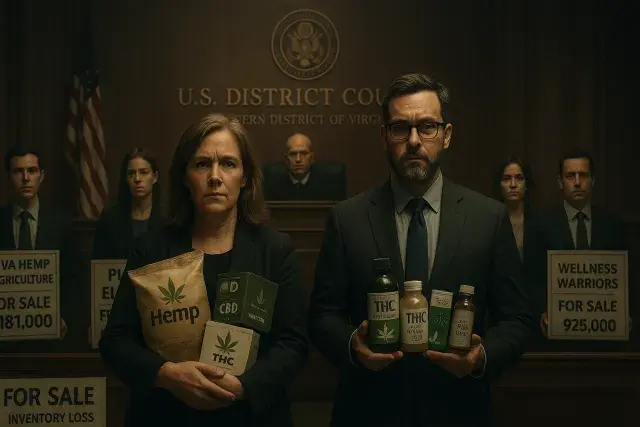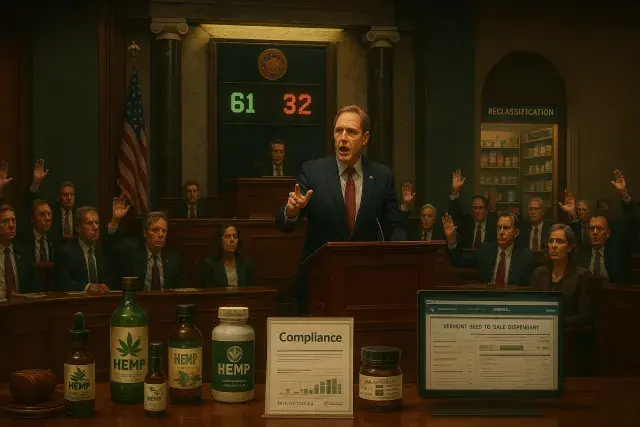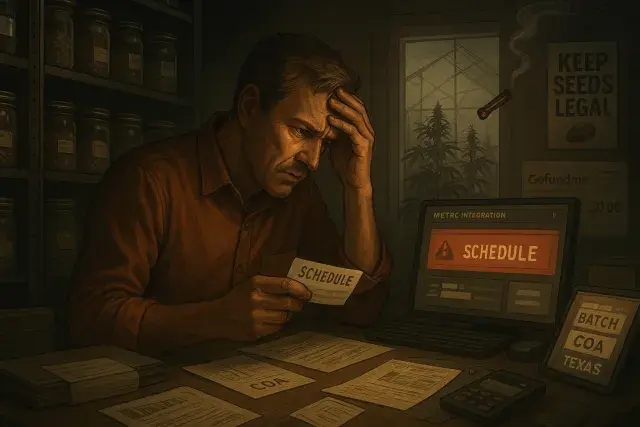
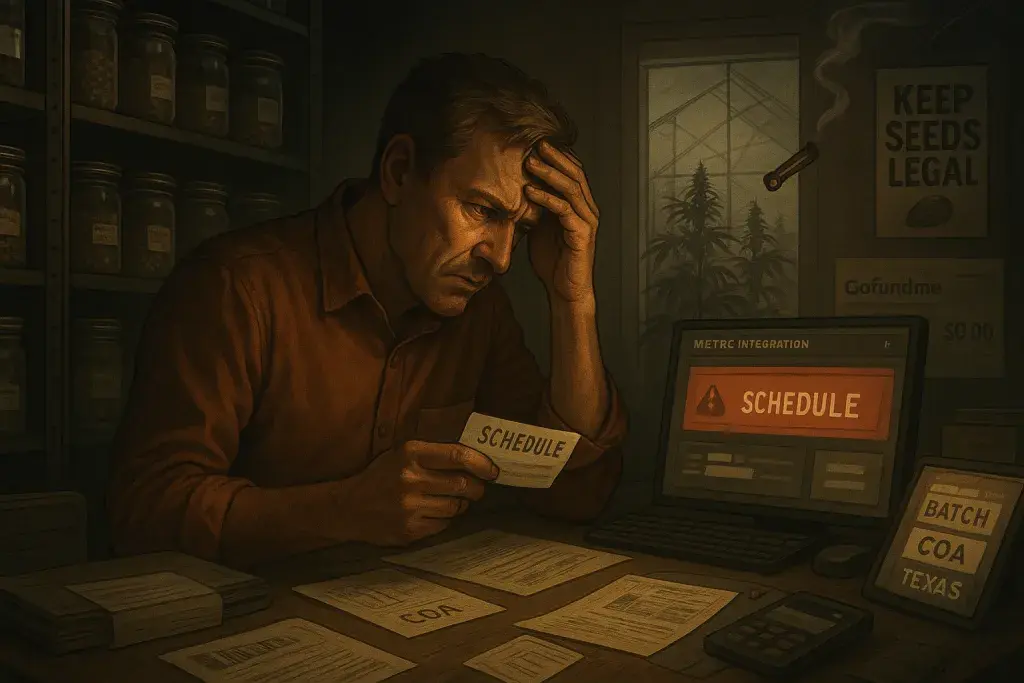
A single section buried inside a federal spending bill is about to upend the legal seed trade for the entire cannabis industry. The FY2026 Agriculture Appropriations Act, signed into law in November 2025, redefines hemp under the Agricultural Marketing Act of 1946 in a way that excludes viable cannabis seeds testing above 0.3% total THC in the parent plant. Set to take effect November 12, 2026, Section 781 doesn't just close a loophole around intoxicating hemp products - it reclassifies most cannabis seeds sold in the U.S. as Schedule I material, regardless of the fact that seeds themselves carry effectively zero THC.
For operators who track every gram of flower and every clone lot through compliance systems, this is a genetics problem wearing a regulatory costume. Seed-to-sale platforms exist to trace plant material from mother stock through harvest to point of sale, and that traceability infrastructure - think METRC integrations, batch tagging, COA attachments - was built around the assumption that seeds fell cleanly inside hemp's legal definition. Multi-state operators running cultivation programs in Texas, where hemp-derived product rules already sit in a tangled legal space, rely on tools like Texas seed-to-sale dispensary software to keep genetics documentation defensible. Strip seeds out of the hemp definition, and that documentation chain suddenly has to prove parentage THC levels retroactively, which is not how breeding programs, or record-keeping, typically work.
Why This Hits Harder Than It Looks
The mechanics matter here. Under the old 2018 Farm Bill language, seeds qualified as hemp because they contain no meaningful THC on their own - a seed doesn't get anyone high, full stop. Section 781 changes the test from "what's in the seed" to "what the parent plant tested," which means a seed from a plant that exceeded 0.3% THC is now federally illegal to ship interstate, bank against, or sell through normal payment channels, even though the seed itself is chemically inert. That's a legal fiction with real consequences: banking relationships evaporate, USPS and other carriers stop shipping, and cashless payment processors - already skittish about cannabis-adjacent accounts - pull back further.
In practice, though, the bigger casualty may be biodiversity. Breeders and seed banks hold landrace genetics and rare cultivars that took decades to preserve. Once a seed company can't legally warehouse, ship, or sell that inventory, there's real risk those genetic lines simply disappear. Unlike a dispensary that can pivot its wholesale menu or adjust SKU management overnight, a seed breeder's inventory is a living, multi-year asset. You can't restock a landrace strain the way you restock vape cartridges.
Industry Response Has Been Muted
What's striking is how little organized pushback has emerged from an industry otherwise fluent in lobbying. Multi-state operators have spent heavily on rescheduling efforts, yet the seed provision has drawn comparatively thin resistance. The American Seed Innovation and Growth Alliance, backed by companies including North Atlantic Seed Co., has launched a "Keep Seeds Legal" campaign, raising modest funds through a GoFundMe and product sponsorships. Some breeders are already retreating to workarounds - selling clones or tissue cultures instead of seeds, or marketing seeds as novelty items not intended for germination. None of these approaches offer durable legal protection; they're stopgaps that regulators could close with the next amendment.
What Operators and Suppliers Should Watch
- Compliance teams should audit any seed or genetics inventory tied to parent-plant THC documentation before the November 2026 effective date.
- Payment processors and banking partners serving seed companies may reassess risk tolerance well ahead of the deadline.
- Cultivators sourcing genetics for future grows should confirm chain-of-custody records now, not after enforcement begins.
- Retailers and wholesalers should monitor whether clone and tissue-culture alternatives face similar regulatory scrutiny down the line.
To be fair, the bill's drafters were aiming at a real problem - the unregulated flood of intoxicating hemp-derived products that alcohol trade groups and others pushed hard to curb. But conflating seed genetics with finished psychoactive goods is a blunt instrument. Whether Congress revisits the language before next November, or whether the industry mounts a legal challenge similar to Kenya's recent seed-law ruling, remains an open question. For now, seed companies, breeders, and the operators who depend on them are left compliance-planning around a law that treats a seed like a drug.