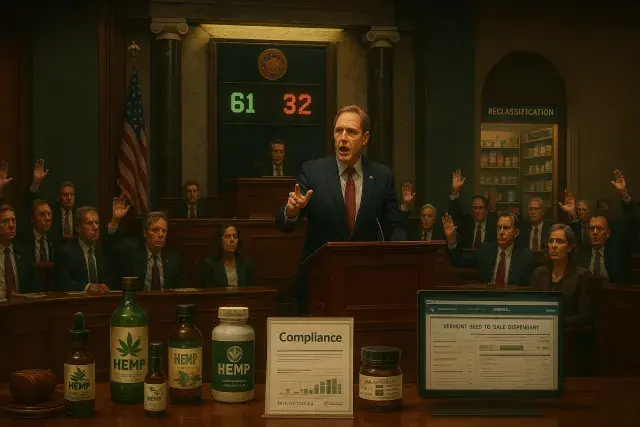
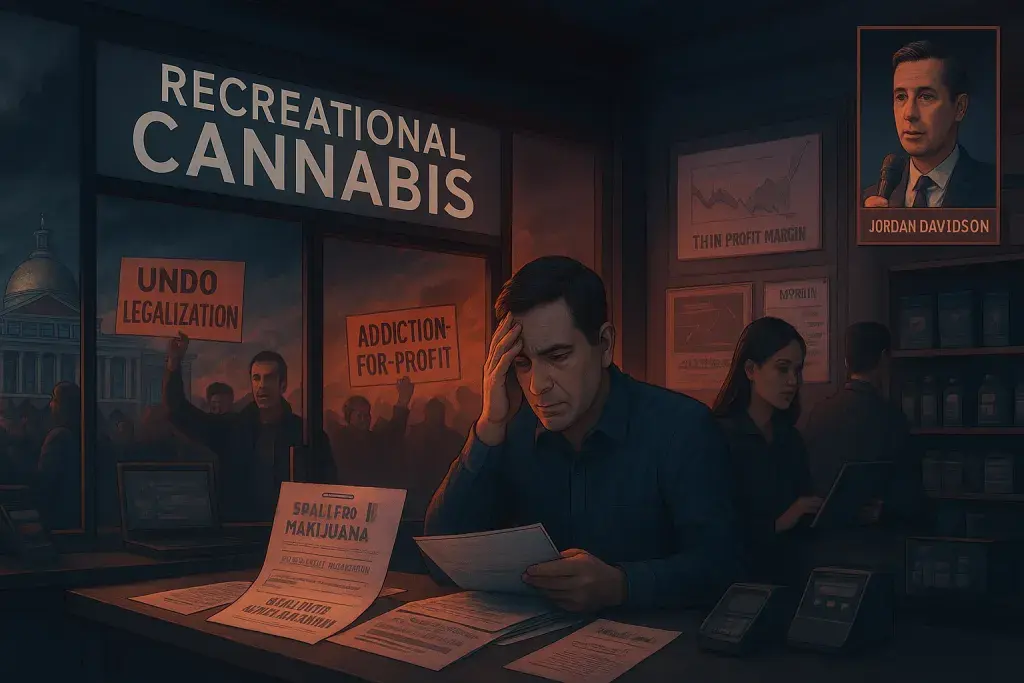
A ballot initiative in Massachusetts is asking voters to undo what they approved a decade ago - the legalization of recreational cannabis. Backed by Smart Approaches to Marijuana, the measure would eliminate adult-use retail while preserving medical dispensaries and reducing recreational possession to a civil infraction. If it passes, Massachusetts would become the first state to reverse course on legalization, and that precedent would reverberate well beyond the Bay State.
For operators already managing thin margins against excise taxes, complex seed-to-sale compliance requirements, and a retail environment where cashless payments remain a daily friction point, this is an existential policy risk - not a distant hypothetical. States adjacent to Massachusetts, including Maine, have built out their own licensed adult-use frameworks with significant capital investment in store infrastructure, POS integration, and wholesale supply chains. Operators tracking regulatory exposure across the region should be paying close attention; tools like Maine cannabis POS systems illustrate exactly how deeply technology infrastructure now ties licensed retailers to a specific regulatory environment - one that depends entirely on legal adult-use status remaining intact.
The group driving the initiative, Smart Approaches to Marijuana, occupies a specific and calculated political position. It does not advocate for criminal penalties for low-level users - its government affairs director Jordan Davidson has been explicit that decriminalization would remain in place under the measure. What the organization targets is the commercial infrastructure: the licensed dispensary model, branded SKUs on retail shelves, loyalty programs, wholesale pricing tiers, and the broader apparatus of what Davidson calls "addiction-for-profit." His own history with cannabis use disorder informs that framing. Whether you agree with the characterization or not, that argument is finding a political audience.
What the Measure Would Actually Do to Licensed Businesses
The operational details matter here. Under the proposed ballot measure, existing recreational dispensaries would be given time to either convert to medical-only operations or sell through remaining inventory. That sounds tidy on paper. In practice, though, the transition creates a cascade of compliance and financial problems that are genuinely difficult to manage.
A recreational dispensary operating under a dual-use or adult-use-only license cannot simply flip a switch to become a medical cannabis provider. Medical programs carry distinct licensing requirements, patient registration systems, physician certification workflows, and often different product formulations and packaging standards. The compliance logs, point-of-sale configurations, and METRC tracking data that support adult-use transactions are not automatically transferable to a medical framework. Staff training, budroom inventory reallocation, and wholesale menu restructuring all carry real costs - and those costs land on operators who may already be carrying debt from initial buildouts or license acquisition.
Inventory is its own problem. Cannabis products have shelf lives, and a wind-down period for recreational sales does not guarantee that a retailer can move existing stock at margin-positive prices. Wholesale suppliers and brands face the same exposure: purchase orders in flight, product batches in transit, and packaging runs already completed against adult-use labeling requirements could all become stranded costs.
The Broader Industry Argument Against Repeal
Alex Gonzalez, president of a Massachusetts cannabis packaging company, told The Independent that reaching this point is "absolutely insane" - a reaction that reflects how deeply the licensed industry has built around the assumption of regulatory continuity. That assumption has always carried risk; cannabis remains a Schedule I controlled substance under federal law, and the industry operates without the standard legal protections that other consumer goods businesses take for granted. No access to standard banking products without workarounds. No federal tax deductions under 280E for most operating expenses. No interstate commerce. Operators accepted those constraints because state-level legalization, once passed, was treated as durable.
The Massachusetts ballot initiative challenges that durability directly. And the industry's pushback - however forceful - has to reckon with the fact that ballot measures are a two-way mechanism. The same direct-democracy process that legalized recreational cannabis in Massachusetts is now being used to potentially undo it.
What Operators Elsewhere Should Take From This
The practical implication for multi-state operators, investors, and vendors is straightforward: political risk in cannabis retail is not limited to federal scheduling decisions or banking reform timelines. It lives at the state and ballot level, and it can move faster than a legislative session.
Dispensary owners should be watching how Massachusetts advocacy groups are framing the commercialization argument - because that framing is portable. The "new Big Tobacco" language Davidson used targets the industry's structural model, not just its product. That kind of argument can travel to other states where adult-use programs are younger, where tax revenue hasn't yet hit projections, or where public health concerns about youth access remain politically potent.
Compliance professionals, in particular, should be building scenario planning into their operational frameworks - not as an abstract exercise, but as a practical exercise in license continuity, inventory management, and conversion pathways. The Massachusetts situation is, for now, a ballot campaign. It may not pass. But the fact that it has reached this stage at all is the data point that matters.