Georgia's medical cannabis program changes materially on July 1, when Senate Bill 220 takes effect and rewrites the rules that have governed the state's licensed dispensaries since the program launched. The law renames low-THC oil as medical cannabis, expands the list of qualifying conditions, removes the requirement that patients be in late-stage or terminal illness, and - most consequentially for dispensary operators - authorizes the sale of vape and flower products for the first time. For licensees already operating in Georgia, that last point is the one that changes the business model overnight.
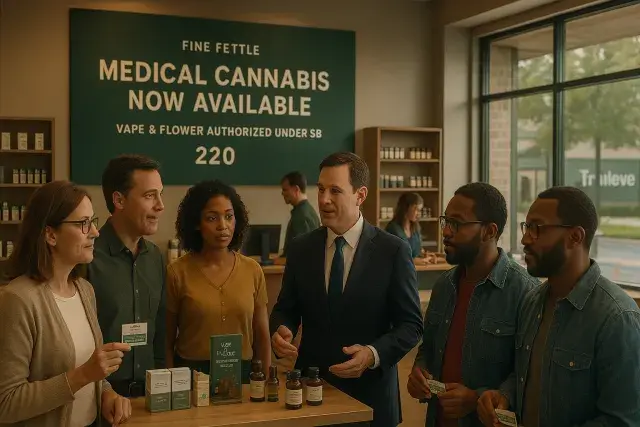
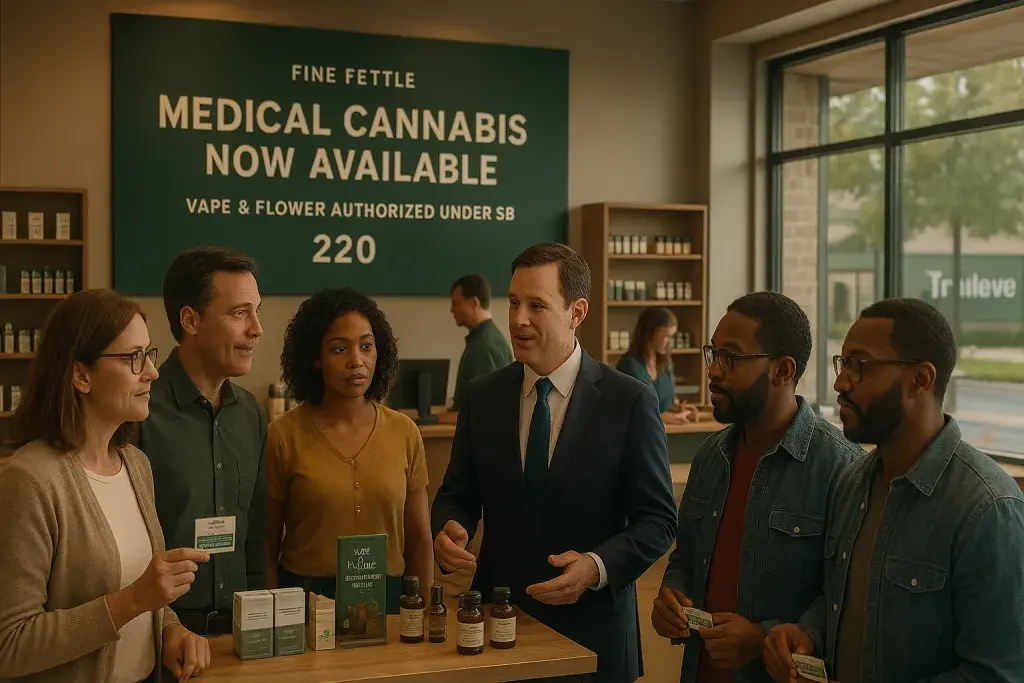
Fine Fettle, a Connecticut-based multi-state operator that holds one of Georgia's six cultivation-and-retail licenses, marked the shift with a grand opening at its new Evans location on Friday, coordinating with the North Augusta Chamber of Commerce. The event drew medical cannabis cardholders in visible numbers - a signal that pent-up patient demand is real, not projected. Fine Fettle's Georgia market president, Judson Hill, was direct about what the law unlocks: "Those are the two main products that most people go to a dispensary for in any state, and we haven't had them." For operators building out SKU menus in Georgia right now, that framing matters - dispensaries are not starting from scratch with consumer behavior; they're catching up to it. Operators in other regulated states can review state-specific operational benchmarks at resources like https://indicaonline.com/markets/rhode-island/ to gauge how program maturity affects retail strategy and product mix decisions across different markets.
What the Qualifying Criteria Change Actually Means for Patient Volume
The terminal-illness requirement was, in practice, a hard ceiling on addressable patient population. Hill put it plainly: "To date you basically have had to be dying of whatever condition it is that you have." Under SB 220, a patient diagnosed with a qualifying condition - cancer is the example Hill cited - can receive a medical cannabis card at diagnosis, not at end-of-life. That is a structural shift in patient eligibility, not a marginal one. Dispensary operators should expect intake volumes to grow as newly eligible patients move through the card application process, and front-of-house staff and POS workflows need to be ready for higher traffic at intake desks.
Fine Fettle's Evans location has built that intake process into its retail model. Patients without a card who are over 21 can consult with an onsite physician to determine whether they qualify; if approved, cards typically arrive within three to four days, at which point the patient gains access to the medical cannabis floor. Until then, they are limited to hemp and CBD products. That two-track customer flow - hemp buyers and credentialed medical patients - requires clear floor separation, compliance-aligned badging, and staff trained to handle both pathways without creating liability at the point of sale.
Vape and Flower Expand the Compliance Surface, Not Just the Product Menu
Adding vape and flower to dispensary shelves is an inventory and compliance event, not just a merchandising one. Flower requires proper storage, weight-based compliance logging, and packaging that meets state labeling standards. Vape products carry their own testing documentation requirements - certificates of analysis need to reflect accurate cannabinoid profiles and confirm the absence of banned additives. Operators who have managed a low-SKU environment selling tinctures and capsules are now building out receiving protocols, inventory controls, and potentially new point-of-sale configurations to handle product forms that behave differently in the compliance record.
Georgia's licensed producers are vertically integrated - they hold cultivation, manufacturing, and retail licenses as a single entity. Fine Fettle's production facility is in Macon; Trulieve, the other Evans operator, received its license a year before Fine Fettle's cohort and has been operating since 2023. That vertical structure means product decisions made at the cultivation and manufacturing level flow directly to the retail floor, without the wholesale intermediary layer common in more open markets. There's no secondary wholesale market to absorb product variability - what gets grown and processed is what gets sold, and compliance gaps at any point in that chain are the operator's problem alone.
Georgia's Thin Licensee Field Concentrates Both Opportunity and Scrutiny
Six licensed producers in a state of roughly eleven million people is a deliberately restricted market. The Georgia Access to Medical Cannabis Commission issued licenses to Fine Fettle's cohort of four in 2023, bringing the total to six. That scarcity means each licensee is operating under close regulatory visibility - with very few players, any compliance failure or patient complaint draws attention in a way it might not in a state with dozens of competing operators. The reputational stakes per dispensary are high.
It also means the Evans market is, by design, a duopoly: Fine Fettle and Trulieve are the only two licensed dispensaries in the area. Hill noted that the Augusta region had been underserved in terms of geographic access, with patients previously traveling significant distances to reach a dispensary. Reducing that access barrier - particularly as patient eligibility broadens - is both a genuine public health consideration and a straightforward business calculation. Operators in similarly constrained licensed markets should watch Georgia's rollout as a reference point for how rapid eligibility expansion interacts with a thin dispensary network. The bottleneck may shift from licensee count to patient processing capacity at the store level. That's an operational problem, and it's a solvable one - but only if operators plan for it before July 1, not after.