The Nevada Cannabis Compliance Board filed four complaints against marijuana companies on Tuesday, with one accusing a Reno dispensary operator of serious tracking and security lapses that could lead to license revocation and $19,000 in fines. This action intensifies the state's regulatory pressure on the cannabis industry since the board assumed oversight in July. The moves signal a broader crackdown aimed at enforcing strict compliance in seed-to-sale tracking, pesticide use, and facility security.
Mynt Dispensary Faces License Loss Over Compliance Failures
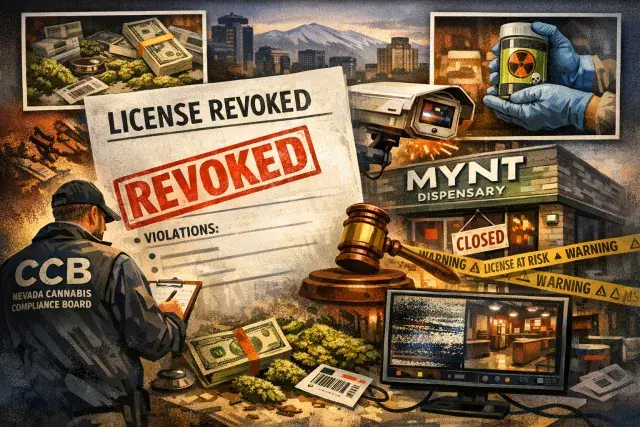
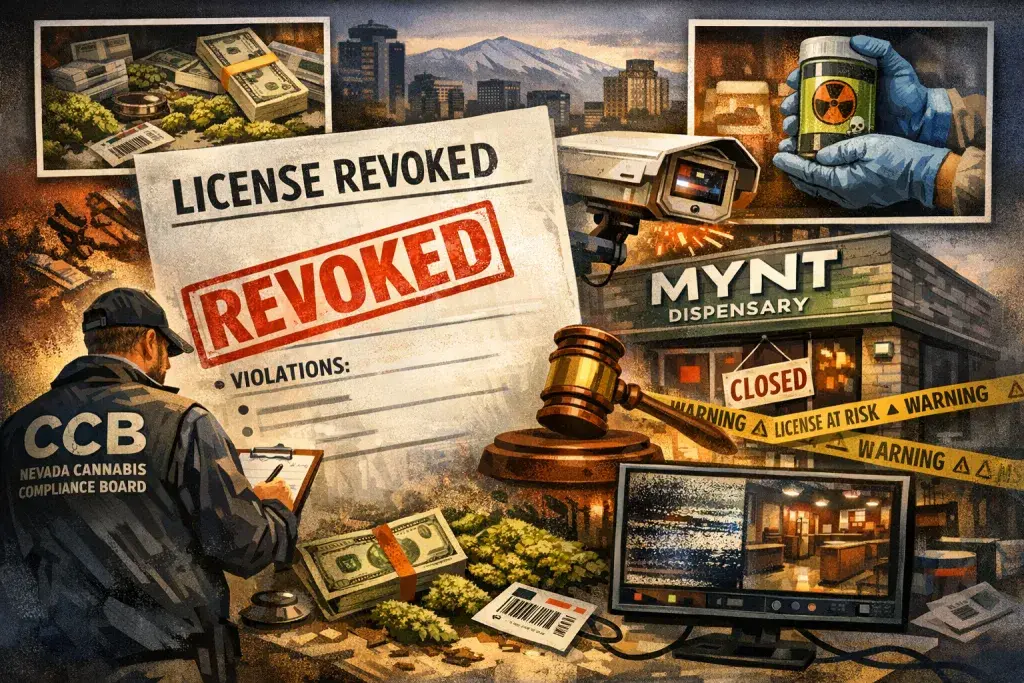
Kynd-Strains LLC, parent of Mynt dispensaries in Reno, drew the board's sharpest recommendation. A routine inspection revealed mismatches in eight product line inventories against the state's mandatory seed-to-sale tracking system, absence of a required camera malfunction log, missing documentation for semi-annual security audits, and an employee working without a valid agency card. The board's legal counsel seeks revocation of the dispensary's medical and recreational licenses, plus a five-year ban on reapplying, alongside $19,000 penalties. Kynd-Strains has the option to request a hearing to contest the charges; representatives did not respond to inquiries Tuesday.
Fidelis Holdings Accused of Deception and Unsafe Practices
Regulators also target Fidelis Holdings LLC, a marijuana cultivator, for alleged intentional deception during a probe sparked in March 2019 by a former employee's tip. The complaint details use of a prohibited pesticide machine, concealed under a cardboard box and lab coat during an unannounced visit, despite denials from management. Employees contradicted the manager, confirming weekly marijuana treatments, backed by a logbook recording 27 instances. Investigators further uncovered an unregistered radiation machine for pre-testing irradiation and untagged marijuana products, violating Nevada's constant tagging rules for tracking. The board proposes revoking the cultivation license, a 10-year reapplication ban, and $65,000 fines.
Additional Violations Prompt Suspensions and Fines
Two other firms face lesser but substantial penalties without license revocation threats. Blossom Group allegedly stored dozens of unlabeled products improperly—including in a shared freezer with employee food—lacked certified pest inspectors, prompting a recommended 30-day suspension of production and cultivation licenses plus $74,000 fines. NV Green, a medical marijuana producer and cultivator, faces about $45,000 in penalties for improper waste disposal and failure to retain required security footage. These cases underscore the board's focus on foundational safety and traceability standards.
Escalating Enforcement Reshapes Nevada's Cannabis Landscape
The board's aggressive stance follows its revocation last month of over a dozen licenses from major player CWNevada, including dispensaries. Since taking control in July, the CCB has prioritized seed-to-sale systems to prevent diversion, black-market infiltration, and consumer risks from contaminants like unapproved pesticides. Nevada's recreational market, legal since 2017, relies on such measures to maintain public safety, ensure tax revenue integrity, and build trust amid federal illegality. Companies now operate under heightened scrutiny, where routine lapses can trigger outsized consequences, potentially weeding out non-compliant operators and elevating industry standards.