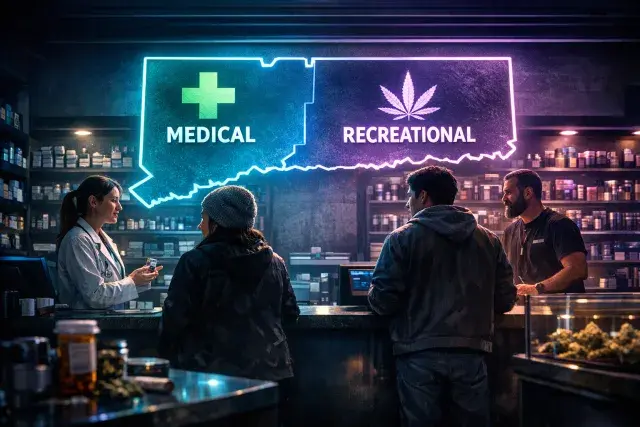
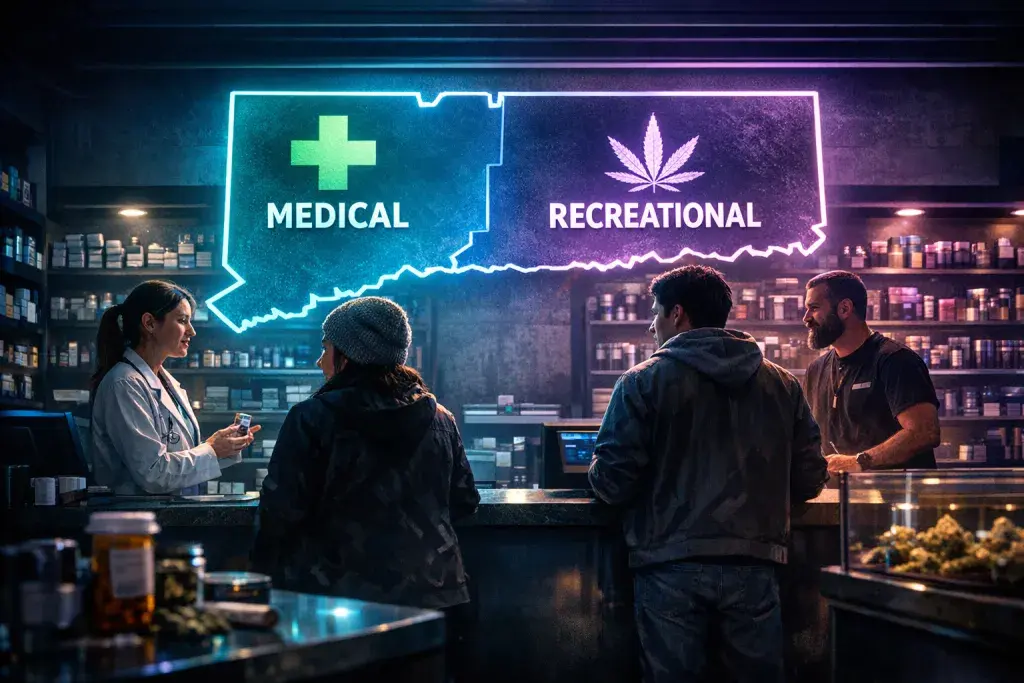
All nine Fine Fettle cannabis dispensaries in Connecticut will open as hybrid facilities on Thursday, welcoming both medical patients and adult-use buyers under a new state law. Company leaders describe the shift as a step toward broader access and equity in cannabis care. This change follows recent regulatory updates that permit recreational retailers to integrate medical services.
Regulatory Shift Enables Hybrid Model
Connecticut's legislature and Department of Consumer Protection approved rules allowing licensed recreational cannabis retailers to convert into hybrid dispensaries. These facilities can now sell to registered patients in the state's Medical Marijuana program alongside recreational customers. Fine Fettle, with locations in Manchester, Norwalk, Old Saybrook, Waterbury, West Hartford, and others, completed the conversion across its entire Connecticut footprint.
The move addresses gaps in medical access, particularly in areas lacking dedicated facilities. Benjamin Zachs, the company's chief operating officer, stated that the hybrid approach fulfills Fine Fettle's commitment to compassionate care without compromising quality or expertise. He emphasized efficiency, noting patients often face long travels or limited choices under prior restrictions.
Expanding Access in a Maturing Market
Connecticut legalized recreational cannabis sales in 2021, building on its medical program established in 2012. Hybrid dispensaries bridge these systems, potentially stabilizing the medical market as recreational options proliferate. Fine Fettle operates similar retail sites in Massachusetts and Georgia, where states have pursued varied paths to cannabis legalization—Massachusetts fully recreational since 2016, Georgia limited to low-THC medical products.
Zachs highlighted equity as a core driver: patients gain consistent options close to home, while the state bolsters its medical framework. This model could encourage other retailers to follow, fostering competition and service improvements.
Implications for Patients and the Industry
For medical patients, hybrid sites promise uninterrupted access to specialized products amid growing recreational demand. The transition supports Connecticut's goal of a robust, patient-centered cannabis ecosystem. Fine Fettle credits state officials for facilitating the change, which aligns with national trends toward integrated markets in legalized states.
Broader effects may include reduced strain on standalone medical dispensaries and enhanced revenue for operators serving dual markets. As Connecticut refines its regulations, such adaptations signal a maturing industry focused on responsible expansion.