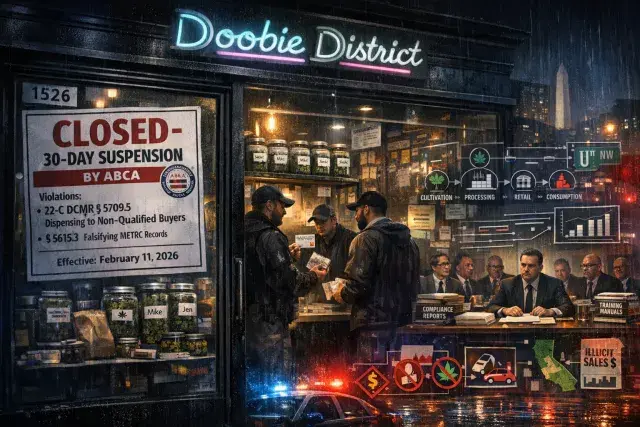
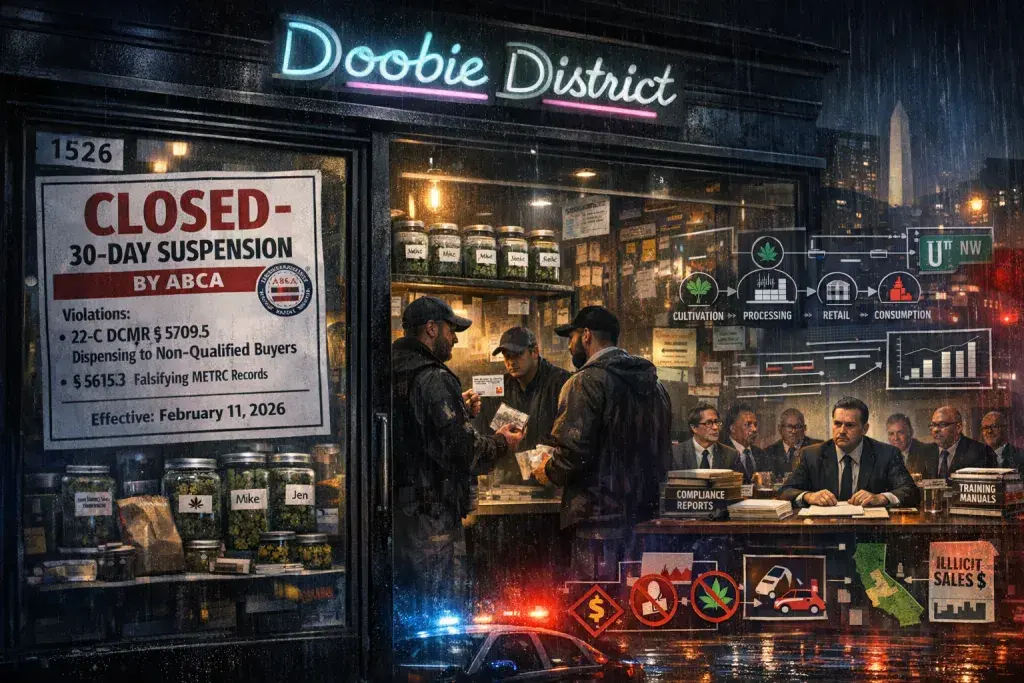
The District of Columbia Alcoholic Beverage and Cannabis Board has imposed a 30-day suspension on KLM, LLC, operating as Doobie District on U Street, for dispensing medical cannabis to unqualified buyers and falsifying records in the METRC seed-to-sale system. Issued February 11, 2026, this ruling underscores the critical need for strict compliance in DC's medical cannabis program to protect patient safety and prevent diversion.
Investigation Reveals Serious Compliance Lapses
An ABCA probe launched May 9, 2025, exposed how Doobie District staff at 1526 U Street, NW, sold medical cannabis to undercover investigators without checking medical cards or caregiver status. Products, sourced from licensed cultivators, bore labels with a staff member's name and ID—not the buyers'. Further scrutiny showed this employee's METRC account exceeded the 8-ounce, 30-day patient limit, with two other accounts similarly oversold using the same credentials.
- Violated 22-C DCMR § 5709.5 by dispensing to non-qualified individuals.
- Breached § 5615.3 by entering false METRC data, undermining real-time tracking.
These lapses highlight vulnerabilities in verification protocols, where rushed sales or inadequate training can erode the program's integrity.
Dispensary Response and Board's Measured Penalty
Owner Peter Murillo acknowledged the issues at a show cause hearing, detailing an internal probe that led to firing implicated staff, retraining others, and new oversight like weekly sales monitoring. Despite these steps, the Board stressed licensee responsibility for supervision, considering but rejecting revocation due to possible unaware ownership. The suspension takes effect soon, with mandatory ABCA-approved training required within 60 days or risk extended closure.
Implications for DC's Medical Cannabis Landscape
Seed-to-sale systems like METRC are foundational to legal cannabis markets, ensuring product traceability from cultivation to consumption and curbing black market flows. DC's medical program, serving registered patients amid recreational delays, demands unyielding standards to avoid health risks from unverified access or contaminated goods. This case mirrors national trends: similar fines and shutdowns in states like California and Colorado for tracking failures, where non-compliance fuels illicit sales estimated at billions annually.
Stricter enforcement could bolster public trust, reduce diversion—linked to youth exposure and impaired driving—and support equitable access. For retailers, it signals investing in tech and training yields long-term viability in a maturing industry.