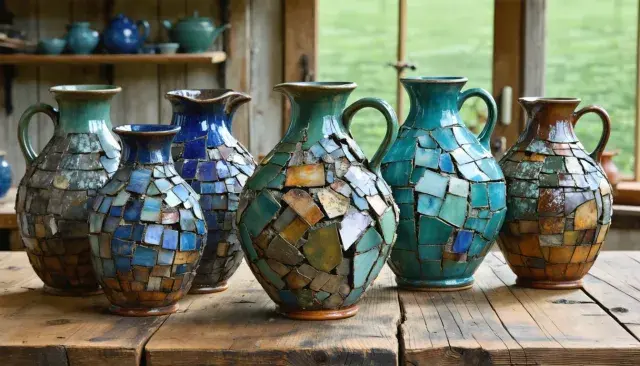
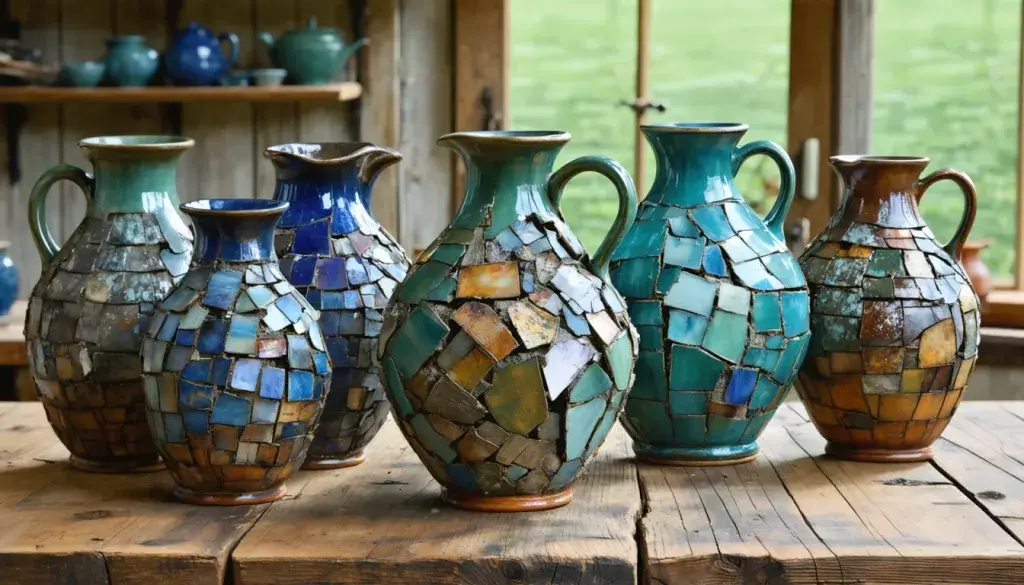
Five jars and pitchers crafted by Arabella Walker in the late 1800s stand as rare examples of memory jugs, vessels adorned with broken china shards pressed into gray clay from a creek bed on her South Carolina farm. These pieces capture a Southern folk art tradition where everyday discards become personal memorials, blending utility with memory. Their survival highlights the overlooked value of such crafts amid modern collecting interest.
Origins in Grave Markers and Home Decor
Memory jugs began as decorations on African American graves before shifting to household items across the South around the turn of the 20th century. South Carolina historian Dr. Rodger Stroup notes their prevalence during this period, despite sparse research. Instructions for crafting them appeared in Godey's Lady's Book during the 1870s, 1880s, and 1890s, marking them as accessible hobbies.
Early assumptions tied them exclusively to African American death rituals, but views have broadened to recognize them as a widespread craft. Stroup points to examples beyond the Deep South, including one in Baltimore featuring a fire marshal's badge from the late 19th or early 20th century. This spread coincided with Victorian enthusiasms for scrapbooks and collections, as household inventions freed women for creative pursuits.
Personal Objects Pressed into Clay
Makers embedded shards of china, coins, toys, nuts, bolts, and other mementos into clay or putty, creating textured surfaces that evoke the honored person's life. Arabella's works follow this pattern, with one vase variation featuring a glass back and hanging hole. A family member later recreated the process using clay from the same creek and local arrowheads alongside Native American pottery shards.
Objects provide dating clues: coins set the earliest possible creation date, while tokens like a 1922 piece or an 1887-engraved metal limit the age. Imprints from lost items add mystery—Stroup describes one jug with outlines of toy horses, imagining a child's playful interference. These absences enhance the jugs' evocative power, turning incompleteness into charm.
From Overlooked Relics to Collector's Gems
A 1980s Newberry auctioneer dismissed the surface "conglomeration" as obscuring fine stoneware, echoing common undervaluation that leaves few intact examples. Stroup's interest sparked during a South Carolina State Museum exhibit on funeral customs in the 1980s, aided by curator Elaine Nichols' work on African American traditions. Institutions like the Diggs Gallery have since showcased them, fueling online tutorials and artist revivals.
Collectors hunt originals at auctions, antique malls, and eBay, though provenance often remains elusive. Stroup seeks early pieces, including one with 1950s Cracker Jack prizes he recognizes from childhood. These jugs connect past hobbies to enduring cultural expression, rewarding those who see treasure amid apparent trash.