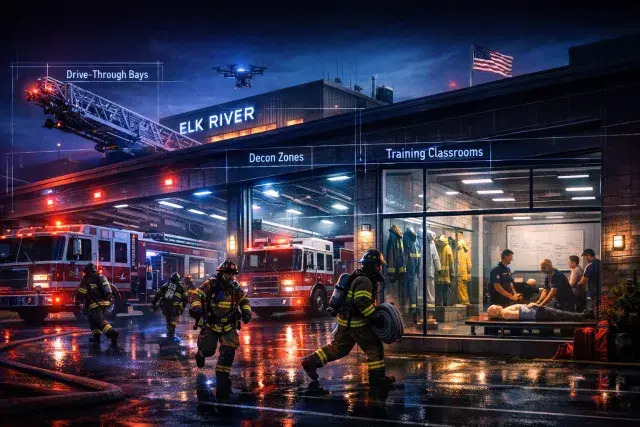
In Elk River, Minnesota, city officials have detailed plans for a cutting-edge fire station designed to meet the demands of contemporary emergency response. This initiative addresses critical infrastructure gaps and promises improved training, equipment handling, and decontamination capabilities, ultimately safeguarding residents amid rising urban risks.
Key Features Tailored for Today's Firefighting Needs
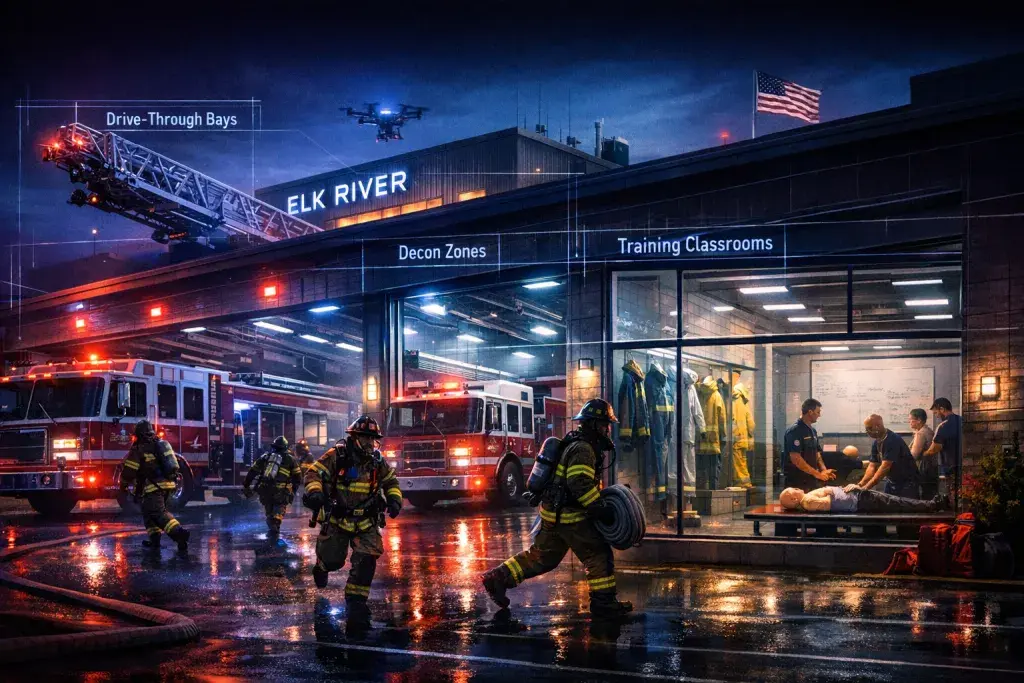
The proposed fire station prioritizes functionality with features optimized for efficiency and safety. Renderings submitted by CNH Architects highlight innovative design elements that go beyond basic storage.
- Sufficient space for equipment, accommodating larger modern apparatus like extended aerial ladders and specialized rescue vehicles.
- Large classrooms dedicated to firefighter training and public education programs, fostering proactive community preparedness.
- “Appropriately sized” decontamination zones to handle hazardous materials incidents, crucial for chemical spills or mass casualty events.
- Drive-through apparatus bays enabling rapid deployment, reducing turnaround times in high-stakes emergencies.
These elements reflect best practices in fire station architecture, where spatial efficiency can shave minutes off response times—potentially life-saving in cardiac arrests or structure fires.
Overcoming Challenges of Aging Infrastructure
Elk River's current fire facilities suffer from outdated layouts ill-suited for today's oversized trucks and advanced gear. Many stations nationwide, built decades ago, feature cramped bays and minimal training areas, leading to inefficiencies. This project responds to that trend, as U.S. fire departments increasingly replace 1970s-era buildings amid a 20% rise in emergency calls over the past decade, driven by population growth and complex incidents like EV battery fires.
By investing in drive-through bays and dedicated decon spaces, Elk River aligns with NFPA standards, which emphasize rapid egress and contamination control to protect first responders from carcinogens and toxins prevalent in modern fires.
Broader Implications for Public Safety and Resilience
This development signals a proactive stance in small-city fire protection, where budget constraints often delay upgrades. Enhanced training classrooms could expand CPR and fire safety workshops, reducing injury rates—statistics show communities with robust public education see 15-30% fewer home fires. Decon facilities prepare for industrial accidents in Elk River's growing manufacturing sector, mitigating health risks like chemical exposure that affect long-term responder wellness.
Looking ahead, the station positions Elk River as a model for mid-sized cities, integrating scalability for future tech like drones and AI dispatch systems. As climate-driven wildfires and urban density intensify nationwide, such forward-thinking infrastructure bolsters regional resilience, ensuring faster, safer responses for generations.