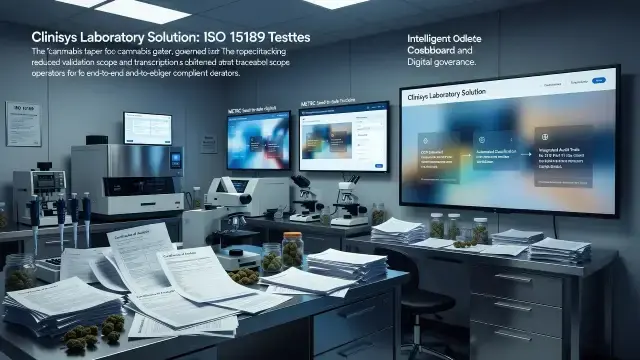
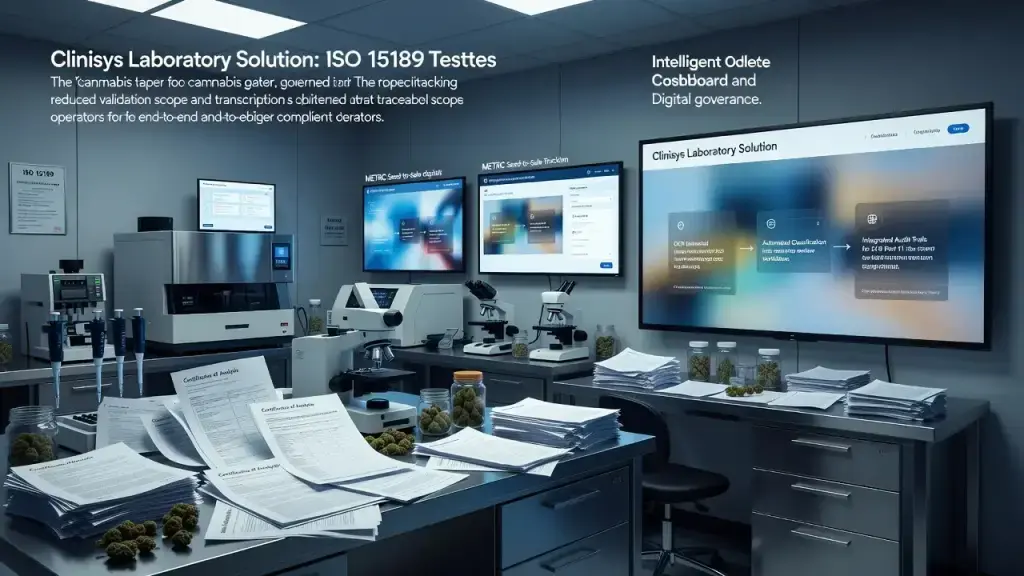
Every cannabis testing lab runs on paper it can't actually search. Certificates of analysis, chain-of-custody forms, instrument printouts, scanned requisitions - they move through the building constantly, yet most laboratory information management systems (LIMS) treat them as dead weight: files to store, not data to use. Clinisys, a laboratory informatics provider serving more than 7,000 labs in 42 countries, has built document intelligence directly into its Clinisys Laboratory Solution (CLS), adding optical character recognition, automated classification, and governed search to a platform many labs already run.
For state-licensed cannabis testing labs, this isn't a back-office curiosity. It's a compliance and supply chain issue with teeth.
Why Paper Still Slows Down a Digital Industry
Cannabis supply chains run on seed-to-sale tracking systems like METRC, but the lab layer underneath those systems still leans heavily on manual document handling. A COA that can't be ingested directly into a LIMS gets re-typed. A scanned instrument output gets filed separately from the batch record it belongs to. Multiply that across potency testing, pesticide screens, microbial panels, and heavy metals analysis, and you get a pre-analytic workload that eats staff time and introduces transcription error - exactly the failure mode that regulators have flagged in drug manufacturing contexts under FDA data integrity guidance and in clinical lab standards like ISO 15189:2022. Cannabis testing labs, though less tightly harmonized nationally, face the same operational math: unstructured documents sitting outside the system of record create traceability gaps that surface later as audit findings.
What Changes When Documents Live Inside the LIMS
CLS document intelligence doesn't replace a lab's record-keeping obligations. It changes where the records live and how they connect to everything else. The system reads scanned forms and instrument outputs, classifies them automatically, and routes extracted content straight into existing review and approval workflows - without a separate login, a separate audit log, or a second validated system to maintain.
- OCR and extraction turn scanned COAs and instrument printouts into structured, searchable data.
- Automated classification cuts down the manual routing and filing that eats analyst time.
- A single governed repository tracks documents from intake through archival.
- Document-triggered events - result review, QC sign-off, approval routing - execute inside the same workflow where sample data already lives.
- One search interface surfaces both structured LIMS fields and unstructured document content.
- Every document action logs into the same traceability framework used for sample data, supporting the computer-generated, time-stamped audit trail standard under 21 CFR §11.10(e).
That consolidation matters for an industry where compliant packaging, potency labeling, and batch testing all hinge on documentation that regulators can trace end to end. A COA that's been manually re-keyed introduces a version-control risk that didn't exist in the original instrument output. Multi-state operators sourcing from several third-party labs feel this acutely - inconsistent document handling across labs means inconsistent audit readiness across the supply chain feeding dispensary shelves.
The Build-vs-Consolidate Question for Lab Operators
Here's the catch for labs already running a validated document management system alongside their LIMS: ripping that out isn't automatic. For most operations, document intelligence inside a LIMS augments rather than replaces a standalone repository. But for labs weighing a new validation cycle anyway - ahead of a budget close, a system upgrade, or an accreditation renewal - the calculation shifts. Running document governance and sample workflows in one validated environment, rather than two, can reduce the overall installation qualification, operational qualification, and performance qualification scope. That's not a minor line item. Validation work is slow, expensive, and often the real bottleneck in lab technology decisions, cannabis testing included.
Where This Points for Cannabis Testing Specifically
Cannabis lab accreditation bodies and state cannabis regulators increasingly expect labs to demonstrate clean chain-of-custody records tying a tested batch back to its source material, its testing protocol, and its final COA. A governed, searchable document trail inside the LIMS - rather than scattered across shared drives and scanned folders - makes that demonstration faster during an audit and harder to get wrong during daily operations. As cannabis testing labs look toward analytics and automated workflows for trend detection and QC oversight, the underlying data has to be structured and traceable first. Unstructured paper sitting outside the system isn't just an inconvenience. It's a gap in the foundation those future tools will need to rely on.