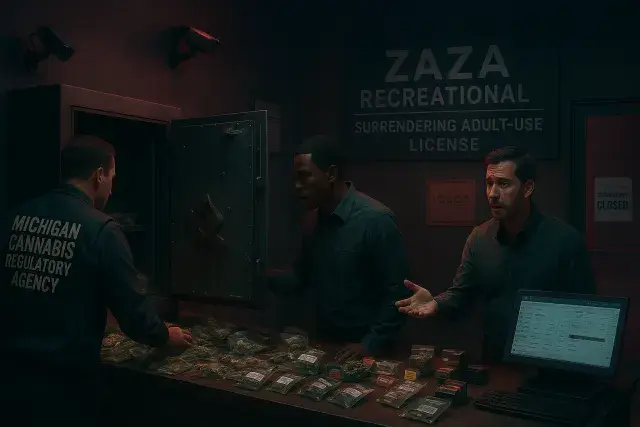
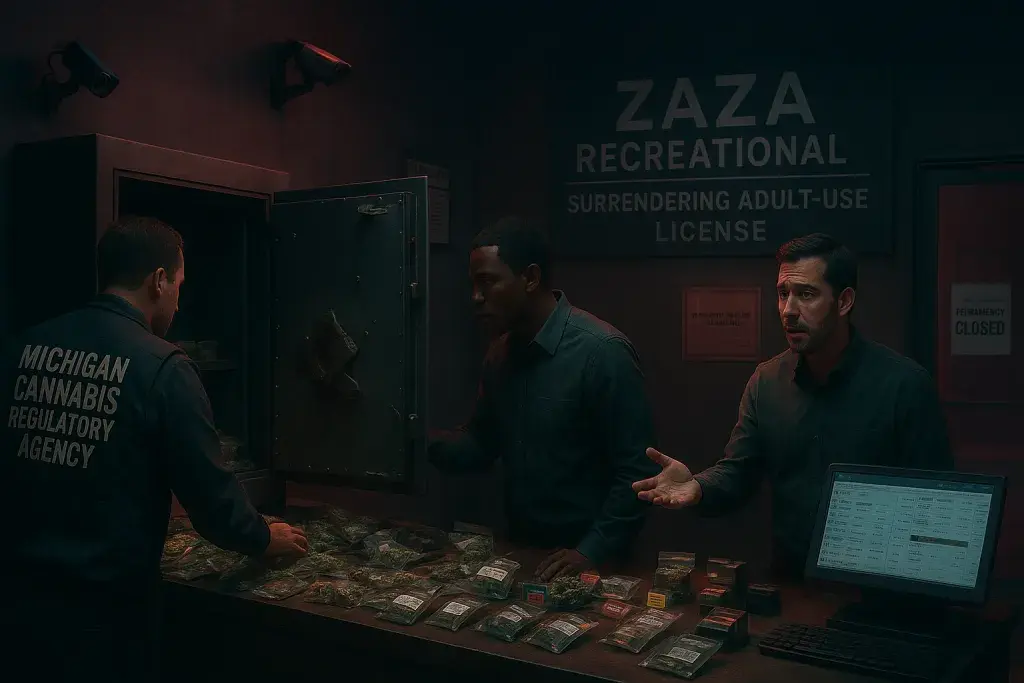
Unique Farms LLC, operating as Zaza Recreational, has agreed to permanently close its doors and surrender its adult-use cannabis license under a consent order with Michigan's Cannabis Regulatory Agency. The case stems from a state investigation triggered by employee complaints alleging that an owner brought outside buyers into the store to purchase pounds of cannabis straight from the vault - a practice that sits well outside any licensed retail transaction model. The company did not contest the findings and waived its right to a hearing, a resolution that closes the matter but leaves plenty for other operators to think about.
What makes this case instructive isn't just the vault sales, though those alone would be serious. It's the pattern underneath them: broken locks, unlocked doors, unsecured product, and a surveillance system with gaps in exactly the footage regulators needed most - exterior entries, the vault, the hallway. Security compliance in licensed cannabis retail isn't a paperwork exercise; it's the backbone of the seed-to-sale accountability that state regulators rely on to trust that inventory logged in METRC actually matches product sitting on shelves and in the vault. When camera calibration is off and key footage is missing, investigators lose the ability to verify anything else in the operation, which is precisely why regulators treat surveillance gaps as an aggravating factor rather than a technicality. Point-of-sale and video systems are supposed to work together as a compliance record, and operators evaluating platforms - including those researching options like cannabis pos california - should treat that integration as a baseline requirement, not an add-on.
Recalled Product and the "Pennying Out" Problem
The more consumer-facing issue here involves recalled cannabis that regulators say was sold anyway. CRA investigators identified 13 batches of a product tied to a recall that had been priced down to a fraction of a cent - a practice sometimes called "pennying out," used to zero out inventory value in the system without formally destroying it. A manager told regulators the product had been destroyed but could not produce documentation to back that up. Destruction of recalled or administratively held product requires a verifiable chain of custody: manifests, witness sign-off, and updates in the statewide monitoring system. Skipping that chain doesn't just violate protocol - it means recalled product with a known safety issue can end up in a customer's hands with no record trail to catch it.
Why Consent Orders Look the Way They Do
Michigan's resolution here follows a familiar structure for serious violations: a hard closure date, a permanent bar on reinstatement, and a requirement to reconcile all inventory in the statewide monitoring system before the license is formally surrendered. That last piece matters more than it might sound. Regulators want a clean final snapshot of what left the building, when, and how - not an open-ended gap that later surfaces in a diversion investigation. For other license holders, the lesson isn't abstract. Vault access controls, camera retention policies, and destruction documentation aren't back-office chores to get to later. They're the evidence base regulators use to decide whether an operator keeps its license at all.
Operational Takeaways for Retailers
- Vault and product access should follow documented, auditable procedures - not owner discretion.
- Surveillance systems need continuous, calibrated coverage of entry points, vaults, and storage hallways, with retention long enough to satisfy audit requests.
- Recalled or administratively held products require verifiable destruction records, not verbal assurances.
- Inventory pricing anomalies, including drastic markdowns on flagged batches, tend to draw regulator attention quickly.