
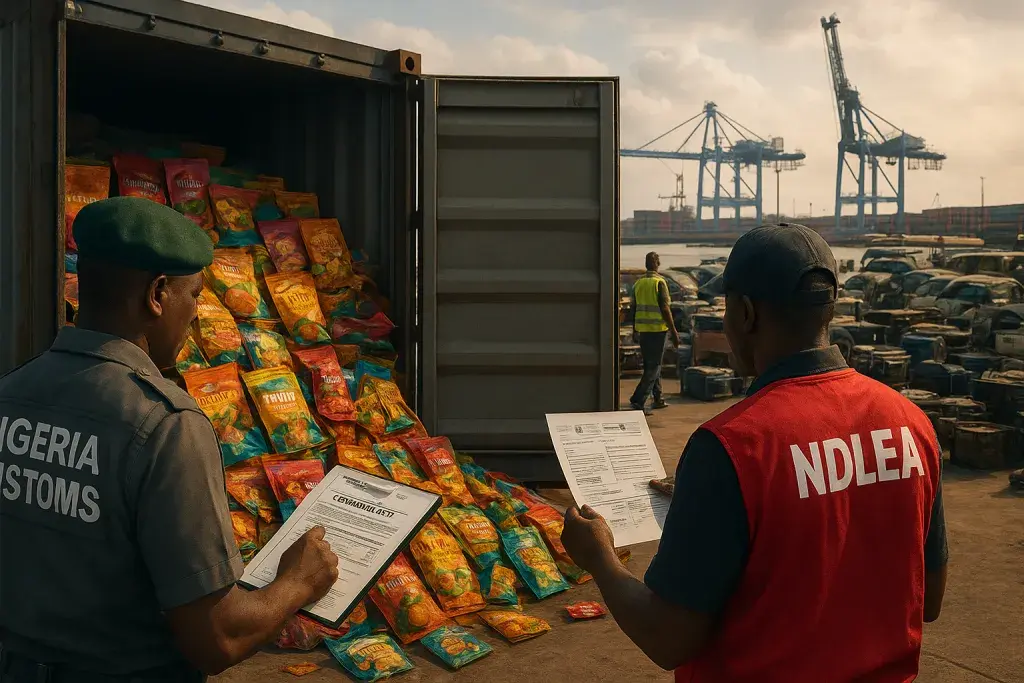
Nigeria's National Drug Law Enforcement Agency has told parents to look twice at the cookies and gummies their children ask for, after operatives uncovered attempts to move cannabis-infused products into the country disguised as ordinary snack food. The warning followed a Nigeria Customs Service interception at Tin Can Island Port in Lagos, where two 40-foot containers held Delta-8 pre-roll cookies and infused gummies hidden among used vehicles, generators, batteries and fabrics. The consignment, valued at roughly ₦373.8m, was handed to the NDLEA for further action.
What makes this case worth watching beyond Nigeria's borders is the packaging itself. The seized products were branded as vegan, hemp-derived items in consumer-friendly flavors like Hawaiian Rain Pineapple Guava and Thai Mango - the same aesthetic language used by legitimate edibles brands operating in regulated markets across the United States. That resemblance is not accidental, and it is exactly why licensed operators in states with mature compliance frameworks lean so heavily on systems built for traceability. In jurisdictions with a properly regulated cannabis retail platform for Rhode Island or similar state-level infrastructure, every batch of infused product carries a certificate of analysis, a tracked SKU, and packaging that meets strict child-resistant and labeling standards - precisely the safeguards absent from whatever supply chain produced these smuggled goods. cannabis retail platform for Rhode Island
The contrast is instructive for compliance teams everywhere. Seed-to-sale tracking systems like METRC exist specifically so that a gummy on a dispensary shelf can be traced back to a cultivator, a test batch, and a manufacturing date. Remove that infrastructure, and you get exactly what customs officers found: unregulated product with no verifiable potency data, no lab testing, and packaging designed to blend in rather than disclose.
Why Packaging Design Has Become a Compliance Flashpoint
Regulated markets require infused products to avoid packaging that could appeal to minors - no cartoon imagery, no candy-brand mimicry, often mandatory opaque or resealable pouches. This isn't bureaucratic decoration; it's a direct response to accidental pediatric ingestion cases that have surfaced in legal states over the past several years. The Nigerian seizure shows what happens when that packaging logic gets inverted: instead of avoiding resemblance to child-friendly snacks, illicit operators actively courted it, presumably to slip products past customs inspectors scanning manifests for obvious contraband.
For licensed operators, the lesson lands closer to home than it might first appear. Any dispensary or brand producing edibles has to treat compliant packaging as a first-line consumer-safety tool, not a checkbox for inspectors. Lab testing and COA documentation aren't just regulatory hurdles; they're the mechanism that separates a transparent supply chain from the kind of product now circulating through informal channels in West Africa.
Operational Stakes for Legitimate Supply Chains
Multi-state operators and wholesalers already absorb significant cost maintaining compliant packaging, batch testing, and inventory logs. Cases like this one make the argument for that spending more concrete: when infused products escape a tracked system, the fallout - accidental consumption, cross-border enforcement action, reputational damage to the broader edibles category - lands on everyone in the supply chain, not just the bad actor.
Retailers and brands operating in regulated states should treat this as a reminder to audit their own packaging language and marketing imagery against current child-appeal restrictions, particularly as flavor-forward edibles remain popular with adult consumers. The line between an appealing legal product and one that draws unwanted scrutiny is thinner than most marketing teams assume.