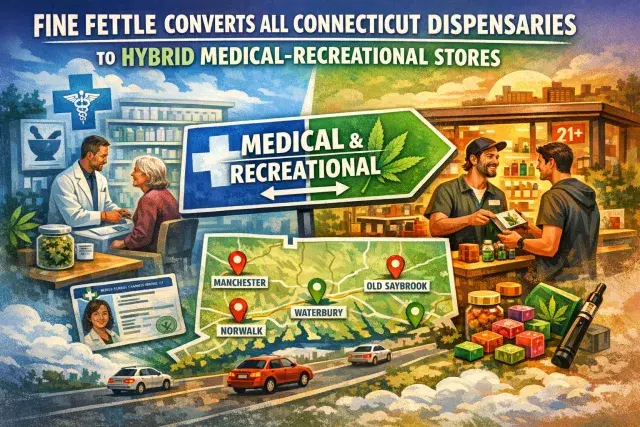
All nine Fine Fettle cannabis dispensaries in Connecticut will shift to hybrid operations on Thursday, Jan. 15, serving both medical patients and adult-use customers. This change stems from recent state regulations permitting recreational retailers to join the medical marijuana program. The move promises greater access for patients while streamlining operations for the company.
Regulatory Shift Enables Broader Access
Connecticut's cannabis landscape has evolved since voters approved adult-use sales in 2021, building on a medical program established in 2012. Lawmakers and the Department of Consumer Protection recently updated rules to let qualified recreational retailers convert to hybrid status. Fine Fettle, operating in Manchester, Norwalk, Old Saybrook, Waterbury, and West Hartford among other locations, seizes this opportunity to expand its reach. “This change allows us to continue fulfilling our mission of accessible, compassionate care while strengthening the state’s medical program,” said Benjamin Zachs, the company’s COO.
Patient-Centered Services Persist Amid Expansion
Each hybrid facility will maintain consultations with licensed pharmacists, available remotely or in person—a key feature of Connecticut’s medical cannabis framework. Zachs emphasized equity: “Patients shouldn’t have to travel far for care or be stuck with limited options.” In areas with sparse medical options, this conversion fills gaps without diluting specialized services. The model balances recreational demand, which has grown steadily since legalization, with the needs of registered patients seeking targeted relief.
Implications for Connecticut's Cannabis Market
Hybrid dispensaries foster efficiency by consolidating supply chains and staff training under one roof. For patients, proximity improves adherence to treatment regimens often recommended for conditions like chronic pain or nausea. Operators like Fine Fettle gain stability in a competitive market, where adult-use sales now dominate volume. Zachs credited state officials: “We thank the legislature and DCP for helping us make this happen.” As more retailers follow suit, Connecticut could see reduced wait times and inventory shortages, though regulators will monitor compliance to protect medical integrity. This step aligns with national trends toward integrated cannabis systems, prioritizing access over silos.