Cannabis companies are adopting artificial intelligence not as a novelty but as a working tool for survival in a business where margins are thin and regulatory scrutiny is constant. From human resources to cultivation rooms to compliance logs, operators across the supply chain are finding that AI can absorb repetitive, data-heavy work that has historically eaten up staff time and budget. The question for most multi-state operators and single-license shops alike isn't whether to adopt this technology, but where it pays off first.
Compliance and Back-Office Functions Lead the Way
No industry outside of alcohol and pharmaceuticals deals with a regulatory patchwork quite like cannabis. Every state, and in some cases every municipality, sets its own rules on licensing, packaging, lab testing, and advertising. A multi-state operator trying to keep compliance logs current across five or six markets is, in practice, managing five or six different rulebooks that keep shifting underneath them. AI tools built to gather, sort, and summarize regulatory text can help compliance teams spot changes faster and flag where internal policy needs updating - though human review still has to close the loop. Nobody should be submitting filings based on an AI summary alone; the technology handles the heavy lifting, not the final sign-off.
The same logic applies to human resources. Payroll, onboarding, applicant screening, and workforce planning are all functions bogged down by manual paperwork in plenty of cannabis companies, particularly smaller operators who built HR processes on the fly during rapid licensing expansion. Automating those tasks frees staff to focus on retention and training, which matters in an industry still working through high turnover in retail and cultivation roles.
Cultivation, Inventory, and the Supply Chain
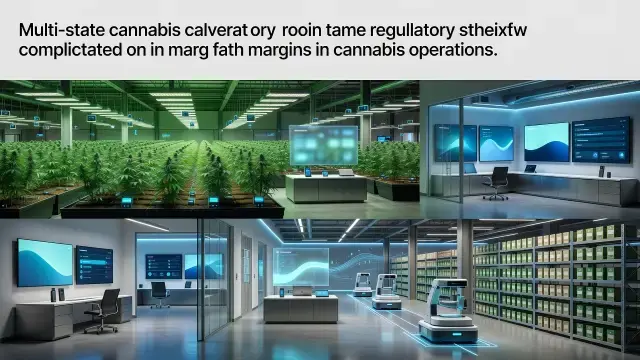
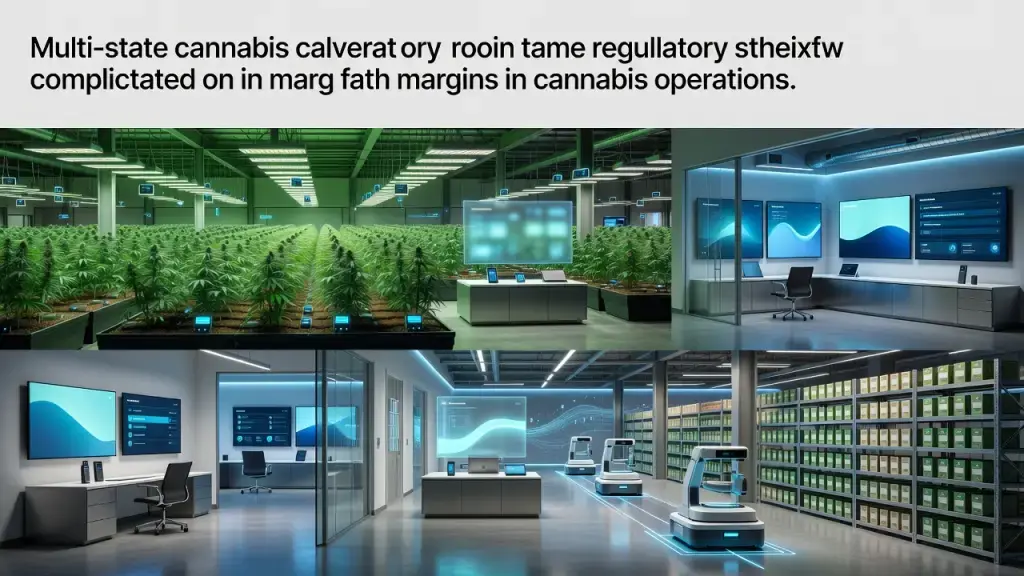
Cultivation has moved well past hand-watered rows and guesswork. AI-assisted systems now handle climate control, nutrient dosing, lighting schedules, and yield prediction in commercial grow operations, giving master growers more precise levers to pull without replacing their judgment. On the retail and distribution side, inventory management is another obvious fit. Picture a distribution warehouse tracking thousands of SKUs across product batches, each one tied to a COA and a seed-to-sale record in a state tracking system like METRC. Scanning technology that can move through storage aisles and flag misplaced or low-stock items reduces the kind of inventory shrinkage that erodes margins already squeezed by 280E tax treatment.
- Soil and climate monitoring that adjusts conditions in real time
- Automated inventory counts tied to compliance tracking systems
- Sales and wholesale pricing data analyzed continuously rather than pulled manually
- Records management systems that organize training materials, reports, and compliance documentation for faster retrieval
What This Means for Operators and Regulators
None of this removes the need for human oversight - if anything, it raises the bar for what that oversight should look like. Privacy and data security are a good example. AI can monitor systems around the clock for anomalies, but a dispensary or processor still needs staff trained to respond when something gets flagged, and a privacy policy that actually reflects how customer and patient data is stored and used. That matters even more for companies holding personally identifiable information tied to medical cannabis patients.
Consumption devices embedded with AI features - temperature customization, battery alerts, usage tracking - also raise a quieter compliance question: how much consumer data these devices collect, and who has access to it. Operators adopting this technology should treat data handling as a compliance issue, not just a product feature, particularly as state regulators pay closer attention to consumer protection in cannabis retail the way they long have in alcohol sales.
The companies getting real value out of AI right now aren't chasing the technology for its own sake. They're applying it to the parts of the business - compliance tracking, inventory accuracy, HR administration - where manual processes were already costing them money and time. That's a sound starting point for anyone still deciding where to begin.