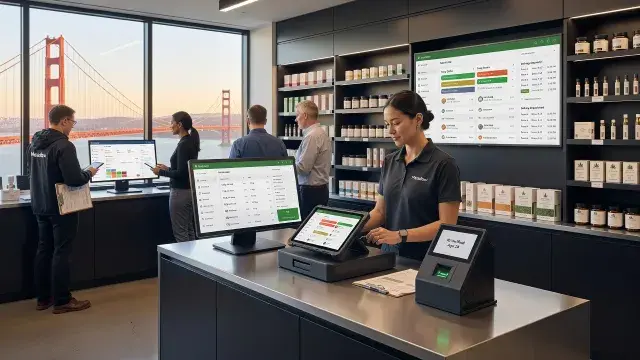
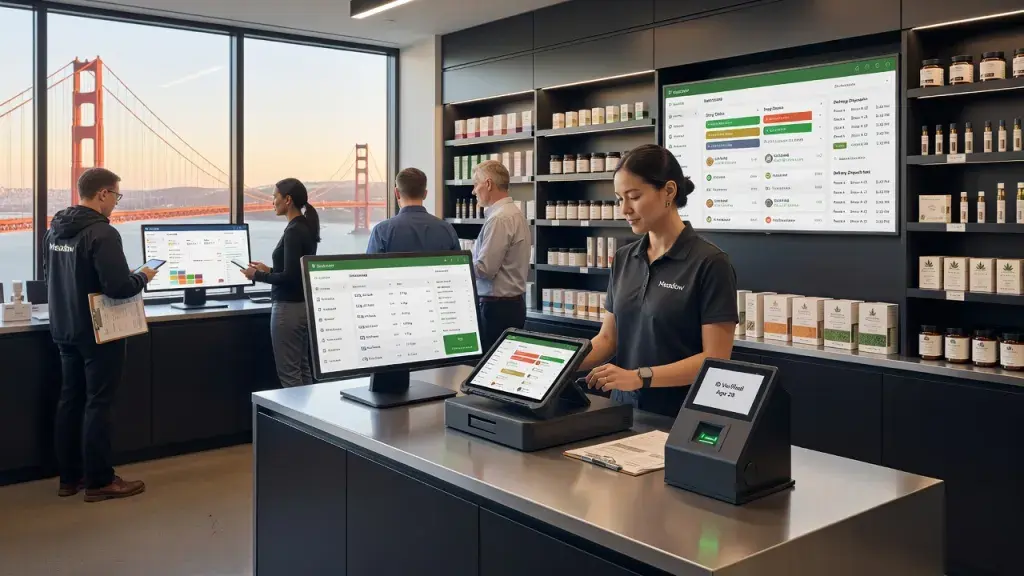
Point-of-sale infrastructure has quietly become one of the more consequential decisions a dispensary operator makes, and Meadow, a San Francisco-based company operating since 2014, has built its business around that reality. The company sells an all-in-one platform covering POS transactions, eCommerce menus, inventory management, loyalty programs, and delivery dispatch - the operational backbone that keeps a licensed cannabis retailer running and, more importantly, compliant.
Why Retail Technology Carries More Weight in Cannabis
In most retail sectors, a POS system is a convenience. In cannabis, it's closer to a regulatory instrument. Every transaction has to reconcile against state seed-to-sale tracking systems - METRC in many markets - and inventory counts need to match what's logged at the state level down to the gram. A mismatch isn't just a bookkeeping headache; it can trigger a compliance review or worse. That's the pressure Meadow's platform is built to absorb, tying menu management, inventory, and sales data together so operators aren't reconciling three separate systems by hand at closing time.
The thing is, dispensary owners rarely have the luxury of treating software as an afterthought. Between local zoning restrictions, state licensing renewals, and the never-ending question of 280E tax exposure, operators need systems that reduce manual error rather than introduce it. A platform that unifies budroom inventory with online ordering and delivery manifests cuts down on the kind of shrinkage and reporting gaps that regulators - and auditors - tend to notice.
Serving Operators Across the Size Spectrum
Meadow positions itself as serving both small single-location dispensaries and larger delivery-focused operations, which is not a small claim in this industry. A single-store operator and a multi-location delivery service have very different operational pressures - one is optimizing for foot traffic and in-store experience, the other for dispatch logistics and order accuracy across a wider service radius. Software built for one doesn't always translate cleanly to the other, so flexibility across store formats matters more in cannabis retail than it might in general merchandise.
- In-store sales requiring age verification and compliant packaging at checkout
- Delivery and pick-up orders requiring accurate manifests tied to license and vehicle documentation
- Menu and inventory syncing to prevent selling products that fail lab testing or exceed compliant possession limits
- Loyalty and rewards programs structured to avoid running afoul of state advertising and promotional restrictions
Scaling Into Adult-Use Markets Without Losing Compliance
As more states expand from medical-only frameworks into adult-use markets, operators face a scaling problem: more customers, more SKUs, more transaction volume - and the same regulatory scrutiny, just applied at higher volume. Software that can't keep pace with that growth becomes a liability rather than a convenience. Meadow's pitch, in effect, is that operational efficiency and regulatory adherence aren't competing priorities; they're the same problem viewed from two angles.
Fair enough - that's the sales pitch every dispensary tech vendor makes. What's worth noting is that the underlying need is real. Cannabis remains a federally unregulated substance at the retail level in terms of banking access, which pushes many dispensaries toward cashless payment workarounds and cash-heavy operations. Systems that can track that volume accurately, and produce clean compliance logs when state regulators come asking, aren't optional infrastructure. They're the difference between a license renewal and a compliance dispute.