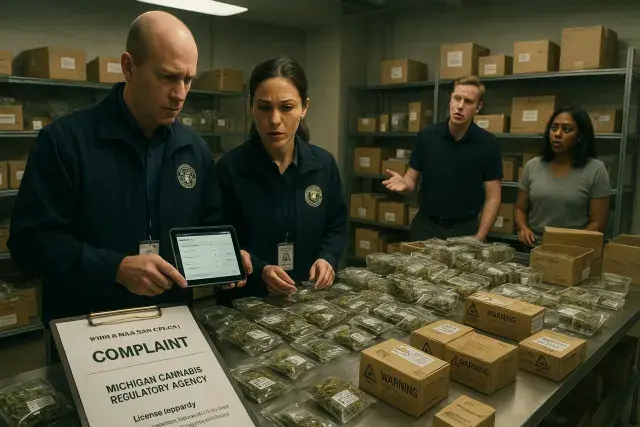
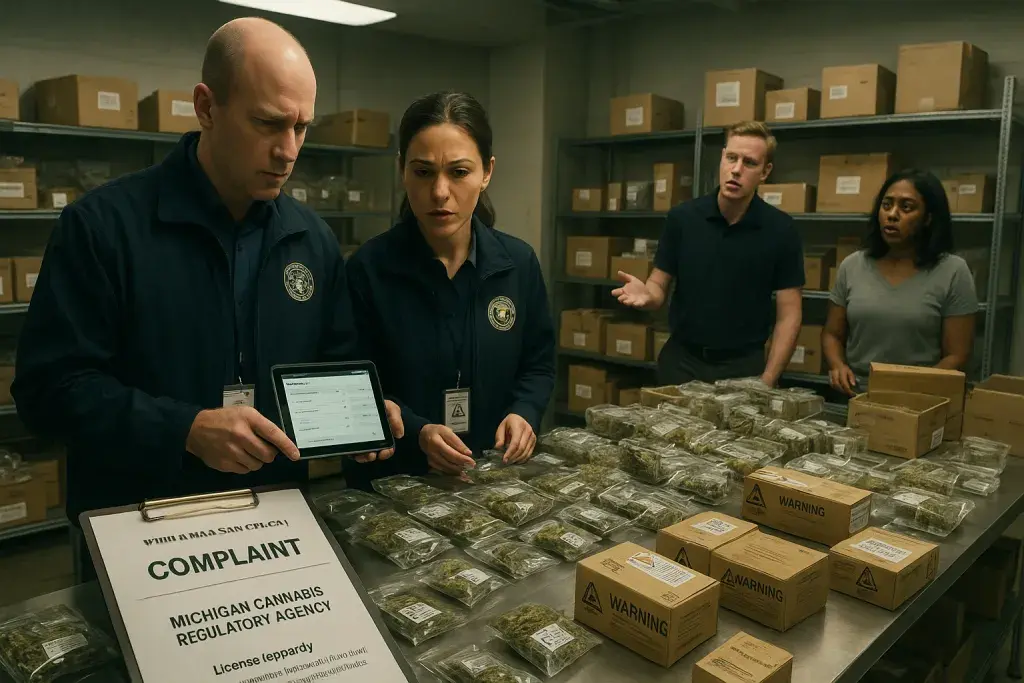
A Michigan cannabis processor is facing license jeopardy after state inspectors found more than 12,000 individual cannabis products on-site without Metrc tags or any other identifying information - including products in California-specific packaging bearing "CA" labeling and California-mandated consumer warnings. The Michigan Cannabis Regulatory Agency filed a formal complaint against VJAS 1, licensed in Harrison Township, citing the untagged inventory, the apparent out-of-state product presence, and what investigators described as an inability by facility employees to explain how the products got there. VJAS now faces fines and potential suspension, restriction, revocation, or non-renewal of its license.
What the Inventory Violations Actually Signal
Seed-to-sale tracking exists for one fundamental reason: every cannabis product in a licensed facility should have a documented origin, a chain of custody, and a recorded location at all times. Metrc - the state-contracted tracking system Michigan uses - assigns individual tags to product batches so regulators can verify that what's on the shelf matches what's in the system. Finding 12,000-plus untagged units isn't a clerical error. It's a breakdown of the entire inventory control framework the license is built on. Operators in other regulated markets who've integrated a cannabis dispensary pos system new york or similar compliance-forward retail technology understand that real-time Metrc reconciliation isn't optional infrastructure - it's the operational baseline that keeps a facility defensible during exactly this kind of inspection. When products can't be accounted for, the compliance log becomes a liability instead of a safeguard.
The California-packaged products make this case harder to explain away. Compliant packaging in state-regulated cannabis markets is jurisdiction-specific by design - warning language, font requirements, universal symbols, and regulatory disclosures are tailored to the laws of the state where the product was manufactured and licensed for sale. California packaging carrying California-specific warnings has no legitimate place in a Michigan licensed facility. That's not a gray area. It points directly toward the possibility of unlicensed, out-of-state product entering the regulated supply chain - which is among the more serious compliance violations a processor can face.
The Metrc Tag Problem Goes Deeper
Here's the part that compounds the situation: investigators did find some properly tagged products at the facility. The catch - those tags, when cross-referenced against Metrc records, showed the products were supposed to be located at entirely different cannabis businesses. That means the tracking data wasn't just incomplete. It was actively misaligned. Products physically present at VJAS were assigned to other license holders in the system. Whether that reflects a receiving error, a diversion situation, or something else is a question the CRA's complaint process will work through - but from a compliance standpoint, it's a worst-case combination of missing tags and misattributed inventory in the same inspection.
Michigan's regulated cannabis market depends on traceability precisely because the state - like every adult-use market - needs to demonstrate that licensed product stays within the licensed system. When a processor can't account for its inventory, can't explain untagged stock, and has products in its possession that Metrc says belong elsewhere, the integrity of that chain collapses. Regulators in states with mature adult-use markets treat Metrc discrepancies seriously enough on their own. Apparent out-of-state product in California packaging takes the concern to a different level entirely.
License Risk and What Operators Should Take From This
VJAS faces a menu of potential license actions - suspension, revocation, restriction, and refusal to renew are all on the table. That range isn't unusual in cannabis enforcement; regulators typically structure complaints to preserve flexibility before an administrative hearing resolves the facts. But the breadth of the alleged violations here - volume of untagged product, out-of-state packaging, Metrc misattribution - makes this the kind of case where license survival is genuinely in question.
For other processors, distributors, and vertically integrated operators, the operational lesson is straightforward. Inventory audits should not be events that happen when a regulator shows up. Routine internal reconciliation - comparing physical SKU counts against Metrc records, verifying that incoming product arrives with proper tags, and flagging any package whose origin can't be immediately documented - is the difference between a clean inspection and a formal complaint. Receiving procedures, in particular, are a point of failure that often gets treated as logistics rather than compliance. Any product arriving at a licensed facility without a Metrc tag should not move further into the operation until its status is resolved. Full stop.
The Michigan CRA has been active in enforcement as the state's adult-use market matures, and cases like this one signal that inspectors are looking beyond surface-level recordkeeping. The presence of out-of-state packaging in this complaint raises questions that extend beyond one facility - and regulators generally treat those questions as reasons to look harder, not less.